


Key Takeaways
- Curly hair starts out drier than straight hair, so chlorine and saltwater hit it harder. The damage isn't really about the water itself; it's about going in unprepared.
- The fix? Easy: wet your hair with clean water first, work in leave-in conditioner (and a little oil for an added barrier), then braid it or put on a swim cap before you go in.
- What you do afterwards matters just as much. Rinse immediately, wash with a gentle co-wash if you swim a lot, follow with conditioner, and dry with a microfibre towel instead of a rough cotton one.
- To keep your curls happy between swims, try weekly deep conditioning , sleep on satin or silk, reduce heat styling, and get regular trims.
In This Article
Why Does Swimming Damage Curly Hair?
How to Protect Your Hair Before Swimming
How to Wash and Condition Curly Hair After Swimming
Tips to Keep Your Curls Healthy Between Swims
To protect curly hair while swimming, wet it with clean water first, apply a leave-in conditioner and a light hair oil, then braid or cap it before you get in. Rinse immediately when you're done. The summers are here, and the pool is calling. But when you think about your curls, you suddenly start to reconsider everything. In this blog, we will tell you that curly hair and swimming can absolutely coexist. You just need to go in with a game plan.
Chlorine and salt water are not your hair's enemies, but lack of preparation is. If you want the right swimming hair care routine for curly hair, covering pre-swim, post-swim, and in-between, we've got it all covered.
Why Does Swimming Damage Curly Hair?
Curly hair is naturally drier than straight hair. The coils and bends in your tresses can make it hard for natural oil from your scalp to travel down to the ends. This way, your hair is already starting with a moisture deficit. Now when you add swimming to the mix, you get:
- Chlorine strips your natural oils. It's a chemical disinfectant. It does not care about your curl pattern. It pulls moisture right out of your strands, leaving them dry, brittle, and frizzy.
- Saltwater dehydrates your hair. Salt draws moisture out. After a beach swim, your curls can feel rough, tangled, and completely parched.
- Chlorine and saltwater can cause serious tangling. Curly hair knots easily, and water agitation makes it worse.
- Colour-treated curls take the hardest hit. Chlorine accelerates colour fading and can turn highlights brassy.
How to Protect Curly Hair While Swimming

So, if you're wondering if saltwater or chlorine is for curly hair, the answer is that both are damaging in different ways. Chlorine is more chemically aggressive, and saltwater is more dehydrating. If you are a regular swimmer, either one will take a toll on your hair care routine without proper precautions. For curly hair swimmers, a leave-in conditioner and a light hair oil are the two products that make the biggest difference before you get in the water.
1. Soak your hair with fresh water first
Dry hair is like a sponge. It will absorb whatever it's surrounded by. If you step into a chlorinated pool with dry hair, it soaks up chlorine. But if you pre-wet your hair with clean water first, it's already full. This gives less room for chlorine to get in.
2. Apply a leave-in conditioner
This is very important for curly hair swimmers. A good leave-in conditioner creates a moisture barrier on your strands before you even touch the water. It coats the hair, keeps hydration locked in, and makes post-swim detangling a lot less of a battle.

3. Use Hair Oil
You can follow up your treatment with a light coat of hair oil before swimming. It will create a barrier on top of the hair shaft and make it hard for chlorine and salt to penetrate. The Manetain Multipurpose Hair Oil is lightweight, non-greasy, and endowed with the goodness of 12 nourishing oils.
4. Braid or twist your hair
Loose curls moving around in water are causing maximum damage. Braiding or twisting before you swim keeps your hair contained, reduces tangling, and minimises how much of each strand is exposed to the water.
5. Use a swim cap
For regular swimmers, the most effective physical barrier you have is a swim cap. Look for silicone caps designed for thick or curly hair. They're easier to get on without flattening your coils.
How to Wash and Condition Curly Hair After Swimming
Here is a lowdown of hair care for swimmers post-swim:
Step 1: Rinse immediately
The moment you're done swimming, get to a shower. The longer chlorine or salt sits on your hair, the more damage it does. Rinse thoroughly with clean, lukewarm water before doing anything else.
Step 2: Cleanse
The right cleanser can make all the difference.
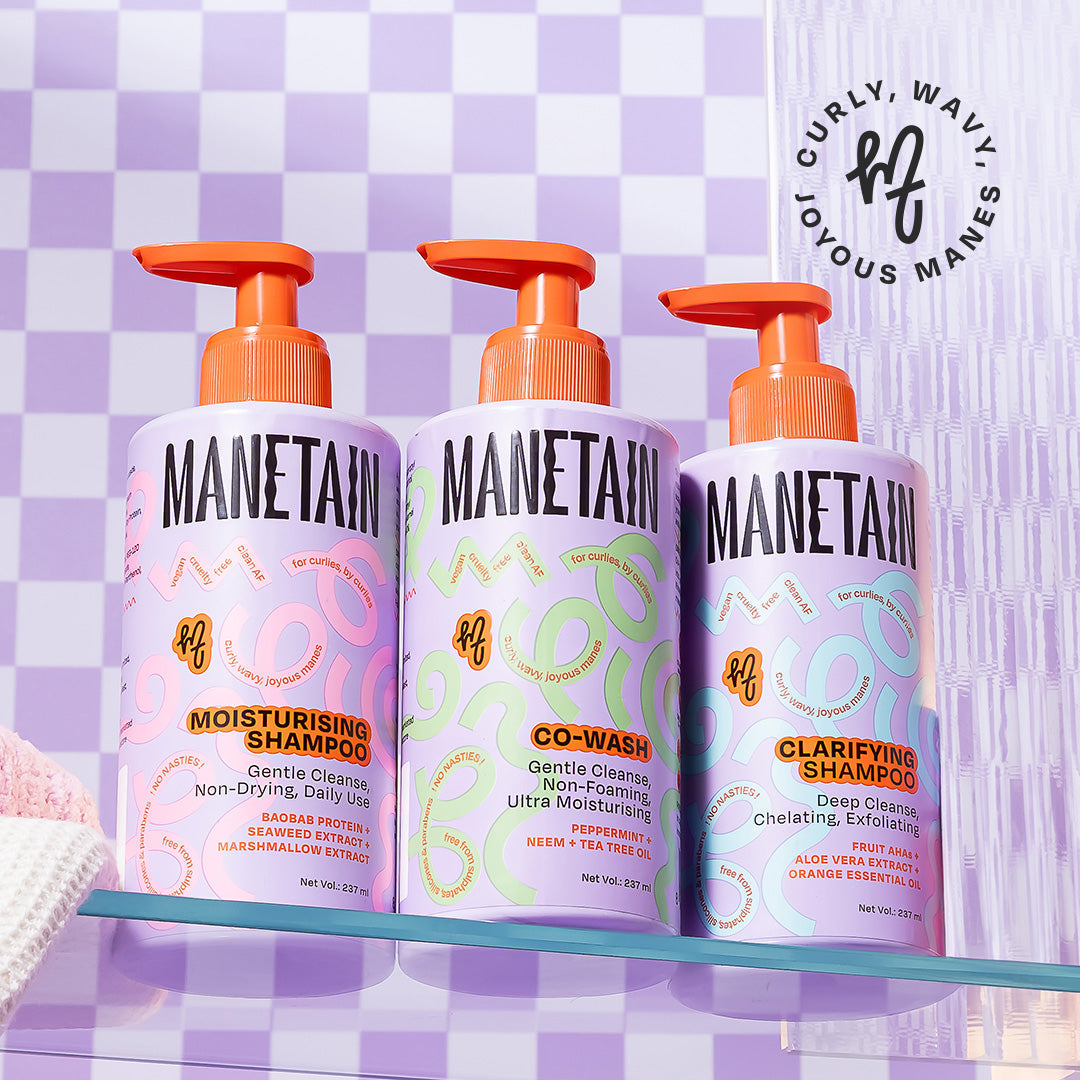
If you swim daily or very frequently, reach for theco-wash for curly hair. It cleanses gently without stripping what little moisture your hair still has. Highly recommended for high-frequency swimmers who can't afford to dry out their curls every single day.
You can also use the clarifying shampooor ACV rinse as a biweekly reset.

Step 3: Condition immediately after
Never skip the conditioner after a swim. Your hair just went through it. Give it what it needs.
On regular post-swim days, a good rinse-out conditioner works. But at least once a week reach for a deep conditioning treatment. The Manetain Ultimate Moisture Therapy or Bond Repair Therapy are excellent choices for you.
Step 4: Dry carefully
A regular cotton towel roughens the hair cuticle and causes frizz. A microfibre towel for curly hair will absorb water gently, reduce friction, and keep your curl pattern intact. Scrunch, don't rub.
Step 5: Detangle with care
For how to detangle curly hair after swimming, the answer is slowly. Use your fingers first, then a wide-tooth comb if needed. Work from the ends upward. Never yank from root to tip.
If You Swim More Than Twice a Week
Casual swimmers and competitive swimmers need different routines. If you're in the pool or the sea more than twice a week, the standard advice of "wash after every swim" will dry your curls out fast. Here is how to adjust.
Daily swimmer routine:
Skip shampoo on most days. Rinse thoroughly with clean water the moment you get out, then reach for a co-wash. The Manetain co-wash cleanses gently enough to use after every single swim without stripping your curl's moisture. Follow with a rinse-out conditioner every time, no exceptions.
Use a clarifying shampoo once a week, not daily, to remove any chlorine or mineral buildup that the co-wash leaves behind. If you swim in saltwater regularly, an ACV rinse every week helps reset your scalp pH and dissolve salt residue.
For colour-treated curls:
Chlorine is the fastest way to fade colour and turn highlights brassy. If your curls are colour-treated, add a deep conditioning treatment twice a week rather than once. Apply a generous coat of hair oil before every swim as a physical barrier between your colour and the chlorine. A swim cap is your strongest line of defence here
Weekly reset:
Once a week, do a full wash day. Clarifying shampoo, deep conditioning treatment, and a full styling routine. This is how you stay ahead of the buildup rather than chasing it.
Tips to Keep Your Curls Healthy Between Swims
The best hair care for swimmers happens between pool days too. Here are a few simple curly hair maintenance tips that you can follow:
- Deep condition weekly
If you swim regularly, weekly deep conditioning is essential. This is how you replenish what chlorine and salt keep taking.
- Sleep on satin or silk
A satin pillowcase or bonnet reduces friction overnight and keeps your curls defined between washes.
- Stay away from heat
Chlorine-exposed hair and heat tools result in more breakage. Let your hair air-dry as much as possible.
- Trim regularly
Split ends travel up the shaft. Regular trims every 8–12 weeks keep your curls looking clean and healthy.

Conclusion
Swimming with curly hair requires a bit of intention and care. Wet your hair before you get in; use a leave-in and oil for pre-swim protection, and rinse them when you get out. In this blog, we've shared the whole formula. It is simple, repeatable, and effective. At Manetain, we believe that your curls were built for a lot of things, and swimming is definitely one of them.
Frequently Asked Questions
1. Can chlorine permanently damage curly hair?
A single experience with chlorine will not usually cause permanent damage, but repeated swimming without correct care over time can cause serious dryness, breakage, colour fading and weakened curl pattern. 3 Habits to Avoid Long Term Chlorine Damage for Curly Hair: Rinse Immediately After Every Swim , Co-Wash Regularly and Deep Condition Well.
2. Should I wear a swim cap over curly hair?
A swim cap reduces direct chlorine and saltwater exposure and significantly cuts down on tangling during a swim. Look for larger silicone caps designed specifically for thick, curly, or textured hair. They are easier to get on without flattening your curl pattern. For colour-treated curls, a swim cap is the single most effective protective measure.
3. How often should I deep condition if I swim regularly?
A weekly deep conditioning treatment is recommended for most swimmers. If you swim multiple times a week, you can also benefit from deep conditioning twice weekly.
4. Can I swim with a leave-in conditioner in my hair?
Yes, you can apply a leave-in conditioner before swimming. This will create a moisture barrier that will reduce how much chlorine or salt gets absorbed in your hair.
5. Is salt water good for curly hair?
Saltwater is not good for curly hair when used regularly without protection. Salt draws moisture out of the hair shaft, leaving curls rough, tangled, and dehydrated after a beach swim. That said, occasional exposure is not damaging if you rinse immediately, condition thoroughly, and deep treat within a day or two of swimming in the sea.
6. Is chlorine bad for curly hair?
Chlorine strips the natural oils that curly hair needs for definition and moisture. Repeated exposure without protection results in dryness, frizz, breakage and fading of colour. Curly hair is more susceptible to damage than straight hair because the curl pattern makes it more difficult for scalp oils to reach the ends of the hair. If you protect it before you swim and rinse it off right away, the damage is much less.
Popular Blogs
Hair Mousse vs Curl Cream: What's the Difference? |Why Sulphate-Free Shampoo Works Better for Curly Hair |What Is the Curly Girl Method? |Curly Hair Care in Bangalore: Hard Water, Humidity and How to Handle Both |Top 8 Frizz Control Products for Curly Hair
Popular Blogs
25+ Curly Hairstyles for Men: Best Haircuts for Every Curl Type | 50 Empowering Curly Hair Quotes That Celebrate Natural Beauty | Trending Haircuts For Curly Hair Women | Best Hair Color for Curly Hair, Curl-Safe & Damage-Free Colors | Top 8 Frizz Control Products For Curly Hair You Need Right Now