
Key Takeaways
- Sulphates strip the natural oils your curls depend on, leaving them dry, frizzy, and prone to breakage. A sulphate-free shampoo restores the moisture your curls need, especially if you're already dealing with dry curly hair.
- The transition takes 4-8 weeks, but the results are worth it. Expect less foam initially as your scalp rebalances over the first month. After 1-2 months you will see better curl clumping, less frizz, more bounce and easier detangling.
- Sulphates are not the only ingredient to avoid. Drying alcohols, water-insoluble silicones and parabens can also sabotage your curl care routine. Instead, opt for hydrating ingredients such as glycerin, aloe vera, panthenol and natural plant oils.
In This Article
Why Sulphates Are a Problem for Curly Hair
What Happens When You Switch to Sulphate-Free
Beyond Sulphates: Other Ingredients to Avoid
The Right Ingredients Make All the Difference
Switching to Sulphate-Free: Common Mistakes and How to Transition
Every twist, bend, and coil gives your hair its distinct personality. But those same features can also make it hard for the natural oils to travel from root to tip.
That is why curly hair is often drier than straight hair, even when it is healthy. When curly hair is regularly exposed to harsh sulphates, moisture gets stripped away from your curls. So if you have ever wondered if sulphates are bad for curly hair or if sulphates damage curly hair, the answer lies in understanding what happens to your curls when you wash them with these ingredients as opposed to a sulfate free shampoo for curly hair.
Why Sulphates Are a Problem for Curly Hair
Traditional shampoos have often relied on strong cleansing agents, also known as sulphates, to create that rich and foamy lather we relate to cleanliness. While they are effective at removing dirt and oil, they can also strip away the natural moisture curly hair desperately needs. This results in frizz, curls that lose their definition, dry, rough strands, and increased breakage.
The problem is not that sulphates cannot clean your hair. The issue is that curly hair does not need that level of cleansing. Sulphates in shampoos such as sodium lauryl sulphate (SLS) and sodium laureth sulphate (SLES) can be powerful detergents that dissolve oil quickly. That's great if you're washing greasy dishes, but washing curls that are already struggling to stay moisturised is not a very good idea.
That is why a sulphate-free shampoo for curly hair forms the foundation of a healthy curl care routine.
What Happens When You Switch to Sulphate-Free
During week 1 the first thing most people are going to notice is less foam, and that is usually where panic is going to set in. Here, let's remember that foam and cleansing are not the same thing. Many sulphate-free formulations use gentle cleansing agents that can remove dirt and buildup without stripping away essential moisture.
During weeks 2 to 4, your hair will start rebalancing. If you've used sulphate shampoos for years, your scalp is going to need time to adjust. Your curls might feel different, but that is because your scalp is learning to regulate oil production again after years of aggressive cleansing. During this phase, your curls will begin rebuilding their natural moisture balance.
After one to two months, the real changes start to show. You will notice better curl clumping, less frizz, more softness, more bounce, easier detangling and better moisture retention. But if you're thinking how long it will take to see results with sulphate-free shampoos, rest assured that it is not an overnight transformation. Most curlies begin noticing changes within four to eight weeks of consistent use, although the timeline can vary from person to person.

Beyond Sulphates: Other Ingredients to Avoid
Sulphates are not the only ingredients that your curls pay attention to. Even if one product is excellent, the team is going to fail to perform if the others are not pulling their weight. Choosing a sulphate-free shampoo for curly hair is a great first step, but your curls also care about what else goes inside the bottle. Come along as we decode the ingredient list:
- Silicones
These are the smooth talkers. They're often added to make hair feel silky and shiny. Many non-water-soluble silicones can coat the hair shaft like a cling film. At first, your curls might feel smooth, but over time that coating can block moisture from entering your hair. This results in heavy curls, reduced bounce, product buildup, and dull-looking hair.
The downside? You can’t rinse out non-water-soluble silicones with gentle cleansers. The only way to get rid of them is to use strong sulphate shampoos like SLS or ALS which strip your curls right back to where you started. It’s a vicious cycle, silicones push you back to sulphates and sulphates undo all your curl care progress. The way out is to avoid silicones in the first place. That’s why curl-friendly routines suggest silicone-free shampoo and light styling products that actually nourish your hair, not coat it.
- Parabens
Parabens are preservatives that are used to extend a product's shelf life. While approved for use within regulatory limits, people with sensitive scalps prefer to avoid them and look for a paraben-free shampoo instead.
- Hard alcohols
Fatty alcohols like cetyl alcohol and cetearyl alcohol can help soften and moisturise curls. Drying alcohol is what you need to be cautious of! Alcohol denat, isopropyl alcohol, and SD alcohol can contribute to dryness, especially if your curls are already moisture-starved.
Manetain’s range of sulphate-free cleansers and conditioners works very well for cleansing and nourishing your hair.

The Right Ingredients Make All the Difference
You can think of every wash day as watering a plant. The right ingredients won't just clean but also help your curls stay hydrated and resilient between washes.
- Humectants
Look for humectants that can attract water into your hair fibre. Ingredients like glycerin, aloe vera, panthenol, and more can help curls retain moisture and stay soft for long.
- Plant oils
Natural oils are helpful in sealing in the moisture without weighing curls down. Some curl-friendly favourites include argan oil, avocado oil, jojoba oil, coconut oil, and more.
- Botanicals
Ingredients like chamomile, rosemary, green tea and other botanical extracts can help to create a balanced scalp environment while gently cleansing your hair.
- Protein
Hydrolysed protein is a strengthening ingredient that can be good for curly hair. It might help elasticity and reduce breakage. But the balance of protein and moisture is critical.

Switching to Sulphate-Free: Common Mistakes and How to Transition
A gentle routine always needs a little patience before the real transformation begins. This is how you can make the transition easier.
- Mistake 1: Expecting too much foam
Less lather does not mean less cleansing. Gentler surfactants will naturally create fewer bubbles while still removing dirt and oil effectively. Judge the quality of your shampoo by how your curls feel after they dry and not by the foam in the shower.
- Mistake 2: Washing too often
Curly hair naturally loses moisture too quickly. Frequent shampooing, even with gentle cleansers, can make dryness worse. Instead, you can wash according to your scalp's needs and consider a co-wash for curly hair if your curls need more moisture.
- Mistake 3: Skipping conditioner
A shampoo cleans, but a conditioner restores. Even the best cleanser won't help your hair look and feel its best without a nourishing conditioner for curly hair to follow.

- Mistake 4: Skipping clarifying
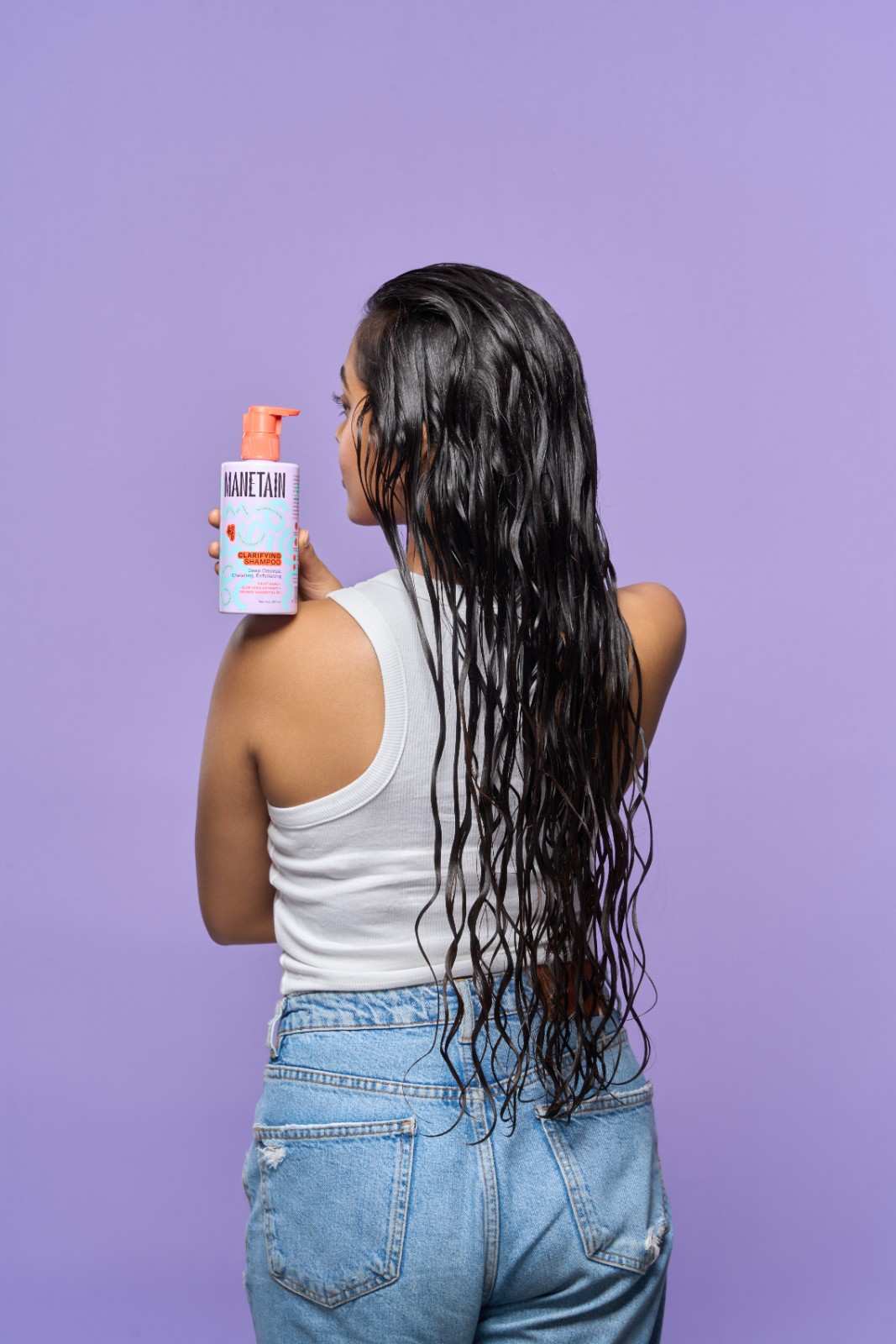
At times, when people switch to sulphate-free products, they stop clarifying altogether. Over time, styling products, pollution, sweat, and hard minerals can accumulate. Therefore, using agentle detoxifying shampoo or clarifying shampoo once every two weeks can give your curls a fresh canvas.
Conclusion
Choosing a sulphate-free shampoo for curly hair is all about understanding how your curls naturally work. When you stop stripping away the oils that your curls depend on, everything is going to change. Frizz is going to become easier to manage, curl definition will improve, breakage will reduce, and your scalp will feel more balanced. If you're looking for a good sulphate-free shampoo in India, Manetain has you covered. In fact, you can check out our collection of curly hair products that can help every curl pattern stay hydrated, healthy, and happy.
Frequently Asked Questions
1. How long does it take to see results after changing to sulphate free shampoo?
Most people notice softer, more hydrated curls within 4-8 weeks of consistent use. The exact timeline depends on your hair’s texture, how often you wash it, and the products you use alongside your shampoo.
2. Why does my hair look dull when I first cut out sulphates?
This is often temporary. Your hair may be adjusting after years of stronger cleansing, or there could be leftover product buildup on your strands. Continue using your sulphate free shampoo for curly hair, condition regularly, and use a clarifying shampoo occasionally to remove buildup and restore shine.
3. Are all sulphate-free shampoos the same?
No. Some contain drying alcohols or heavy silicones, while others are enriched with hydrating ingredients like aloe vera, glycerin, botanical extracts and nourishing oils. Always read the ingredient list rather than relying only on front-label claims.
4. What’s the difference between sulphate free and paraben free?
Sulphates are cleansing agents, while parabens are preservatives. A sulphate-free shampoo reduces the risk of excessive moisture loss, whereas a paraben free shampoo avoids a particular class of preservatives.
Popular Searches
Strong Hold Gel For Curly Hair | Leave In Conditioner For Curly Hair | Curl Defining Products | Curly Hair Cream | Silk PillowCase
Popular Blogs
25+ Curly Hairstyles for Men: Best Haircuts for Every Curl Type | Curl Cream Application 101: Tips for Bouncy, Well-Defined Curls | Silk and Satin Bonnets for Curly Hair: Benefits and Tips to Use Them | Hair Mousse vs Gel for Curly Hair: Which Gives Better Hold? | What Causes White Hair At Early Age? Reasons, Myths & Prevention