
Key Takeaways
- Understanding hair porosity can completely change how your hair behaves.
- Once you know how to check hair porosity and recognise the signs of low porosity hair, choosing the right hair care products becomes effortless.
In This Article
- Key Takeaways
- What Is Hair Porosity and Why Does It Matter?
- Types of Hair Porosity
- How to Check Hair Porosity at Home
- Signs and Symptoms of Low Porosity Hair
- Best Ingredients for Low Porosity Hair
- Best Low Porosity Hair Care Routine
- Frequently Asked Questions
Has it ever happened that you slathered some of the best hair care products on your hair only to find them sitting on top of your mane, feeling very afraid to commit? This is the world of low porosity hair, where moisture takes forever to show up.
Hair is the richest ornament of a woman. But the thing is that your hair needs the right care. Understanding hair porosity could become your golden ticket to figuring out what exactly your hair needs. Porosity is like a hair type, and once you get to know it, everything else is going to fall into place.
No matter if you are dealing with stubborn frizz, product build-up, or hair that takes hours to dry; porosity could be at the heart of it all. In this blog, we are going to talk about how to check hair porosity and pinpoint those deadly signs of low porosity hair. Finally, we will help you build a low porosity hair care routine that shall work.
What Is Hair Porosity and Why Does It Matter
Hair porosity refers to how well your hair can absorb and retain moisture. Hair porosity is not another buzzword that is out there to confuse you. It is, hands down, the most important factor in determining which product will work for your hair and which won't.
To understand better, we've got a little analogy for you. Think of your hair cuticle like roof tiles.
- Open tiles means moisture gets in fast.
- Closed tiles means moisture struggles to enter.
Low porosity hair has tightly shut cuticles which means moisture is not able to enter easily, products often sit on top, and build-up happens faster.
Types Of Hair Porosity
Hair porosity falls into three main categories, each with distinct characteristics, needs, and challenges.
|
Hair Porosity Type |
Cuticle Behaviour |
Moisture Absorption |
Feel |
|
Low Porosity Hair |
Cuticles tightly closed |
Slow absorption, great retention |
Product build-up, dry ends |
|
Medium Porosity Hair |
Slightly raised |
Balanced |
Easy to manage |
|
High Porosity Hair |
Widely open |
Fast absorption, poor retention |
Frizz, dryness |
How To Check Hair Porosity at Home
These three simple tests can reveal your hair's moisture personality. The best thing about these DIY hair porosity tests is that they take less than 10 minutes and can be done with things that you already have at home.
Test 1: The Float Test
This is the OG hair porosity test that everyone swears by. It’s quick, visual, and pretty reliable.
What you need:
- A clean, shed hair strand. Just make sure it’s clean and product-free
- A glass of room-temperature water
How to do it:
- Fill a clear glass with room-temperature water
- Take your clean hair strand and gently place it on the water’s surface
- Wait 2-4 minutes and observe what happens
What it means:
- Floats on top: Low porosity
- Floats in the middle: Medium porosity
- Sinks to the bottom quickly: High porosity.

Test 2: The Spray Test
This test shows you in real-time how your hair reacts to moisture.
What you need:
- A spray bottle filled with water
- A small section of clean, dry hair
How to do it:
- Section off a small area of dry, clean hair
- Lightly mist it with water from the spray bottle
- Watch how your hair reacts
What it means:
- Water beads up and sits on the surface: Low porosity
- Water absorbs gradually: Medium porosity
- Water disappears almost instantly: High porosity
Test 3: The Slip ‘n’ Slide Test
This one’s all about how smooth or rough your hair cuticles are.
What you need:
- A single strand of clean, dry hair
- Your fingers
How to do it:
- Hold a strand of hair between your thumb and forefinger
- Slide your fingers up the hair shaft from tip to root
- Pay attention to how it feels
What it means:
- Feels smooth with minimal bumps: Low porosity
- Slightly textured but not rough: Medium porosity
- Feels rough, bumpy, or catches on your fingers: High porosity
Signs and Symptoms of Low Porosity Hair
Low porosity hair has a distinct personality, and once you know the signs of low porosity hair, you’ll recognize it instantly. Come along as we help you decode the signals:
1. Water Just Sits There
When you spray or wash your hair, water beads up on the surface like your hair is waterproof. It takes forever for your hair to actually feel wet.
Why it happens: Those tightly closed cuticles are basically forming a barrier. Water can’t penetrate easily, so it just sits on the outside.
2. Products Build Up
Creams, oils, and stylers just sit on top of your hair, making it feel heavy, greasy, or coated. By day two, your hair looks dull and feels gross.
Why it happens: If moisture can’t get in, neither can products. They accumulate on the surface, creating that dreaded product buildup.
3. Frizz
When your hair isn’t properly moisturized (because products can’t penetrate), it seeks moisture from the air, leading to frizz.
Lightweight products like Manetain Leave-in Conditioner penetrate better without weighing hair down.
Best Ingredients for Low Porosity Hair
Low porosity hair is picky. It doesn’t want heavy butters, thick oils, or anything that’s going to sit on the surface. Here are some of the ingredients that actually work:
-
Aloe vera
Aloe vera is lightweight, water-based, and packed with vitamins, minerals, and amino acids. It can penetrate the hair shaft easily and deliver hydration without heaviness.
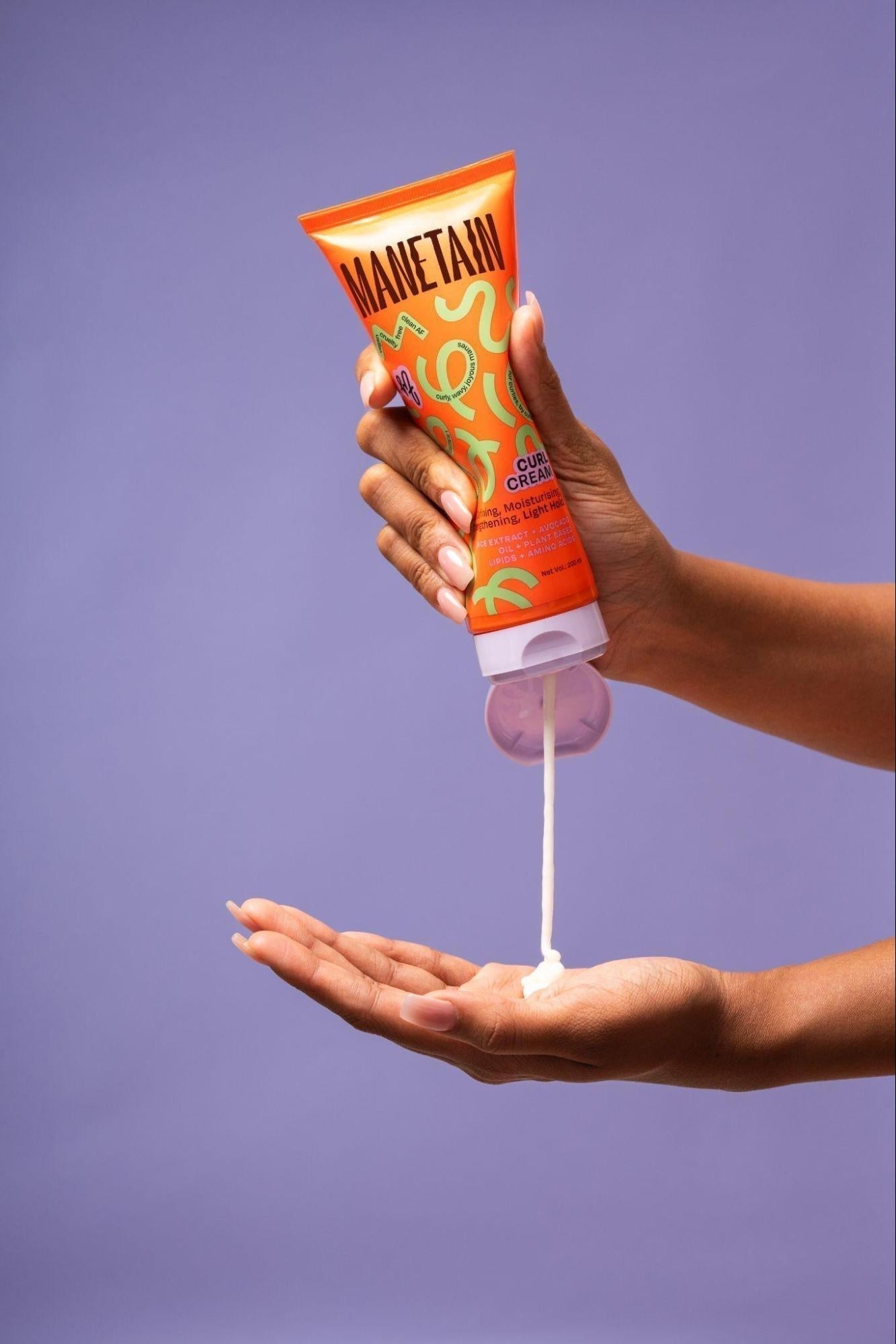
Manetain Co-wash contains aloe as a key ingredient, offering a gentle cleanse that hydrates while removing light buildup. It’s also a star ingredient in Manetain Curl Cream and Manetain Volume Gel, both designed to work with low porosity hair.
-
Glycerin
Glycerin is a humectant. This means that it draws moisture from the environment into your hair. For low porosity hair that struggles to absorb moisture directly, glycerin acts like a magnet, pulling hydration in.
-
Honey
Honey is a natural humectant and emollient. It attracts moisture and helps seal it in, making it perfect for low porosity hair.
-
Argan oil (light use)
Unlike heavier oils (coconut, castor), argan oil is lightweight and has small molecular structures. This helps it penetrate the hair shaft rather than just coating it.
-
Coconut water
Coconut water is ultra-lightweight, hydrating, and packed with electrolytes and nutrients.
Best Low Porosity Hair Care Routine
Building the best low porosity hair care routine is about using the right products in the right order. This routine focuses on getting moisture in, keeping it there, and preventing the buildup to sabotage your progress.
The Golden Rule for Low Porosity Hair is
“Light beats heavy, every single time.”
Step 1: Gentle Cleansing

Low porosity hair needs clean cuticles to absorb moisture. To that end, you can use a hydrating shampoo for curly hair that doesn’t strip.
Manetain Moisturising Shampoo is ideal for regular washes. It is light, sulfate-free, and curl-safe.
For oily scalp or buildup, use Manetain Gentle Detoxifying Shampoo weekly. Add Manetain Hair Scalp Scrub once a week to clear buildup
Step 2: Lightweight Conditioning

Heavy conditioners mean build-up. Use a deep conditioner for curly hair sparingly. Apply with a heat cap for best results.
Our best picks are:
- Manetain Multipurpose Conditioner
- Follow with Manetain Leave-in Conditioner
Step 3: Occasional Clarifying
Low porosity hair needs clarifying. You can use Manetain Clarifying Shampoo once every 3–4 weeks or an apple cider vinegar for hair rinse to reset pH.
Step 4: Moisturise Smartly
Apply products on damp hair. You can use lightweight stylers like Manetain Curl Cream, Curl mousse for volume. You can use Hard hold gel for curly hair only if needed. Finish styling with Hair setting spray for frizz control. You can also seal ends lightly with Manetain non sticky hair oil.
Make sure that you dry your hair l gently using a microfiber towel, sleep with a sleep bonnet for curly hair, to let your curls live their best life.
Frequently asked questions
What causes hair to have low porosity?
Low porosity hair is usually genetic, meaning you’re born with tightly packed hair cuticles. These cuticles lie flat and don’t open easily, which makes moisture penetration difficult.
Other factors that can contribute to low porosity hair symptoms include excessive protein treatments, and product buildup over time.
How does low porosity hair affect moisture absorption?
Low porosity hair struggles with moisture absorption, not moisture retention. This is why:
- Water beads up during washes
- Leave-in conditioner for dry hair feels like it’s sitting on top
- Low porosity hair frizz appears even after styling
Once moisture does get in, low porosity hair holds onto it well. That’s why using warmth, steam, or a shower cap for women during conditioning makes a huge difference.
Which hair products work best for low porosity hair?
The best hair care products for low porosity hair are:
- Hydrating shampoo for curly hair
- Lightweight deep conditioner for curly hair
- Aloe-based curl defining cream or curly hair cream
- Non greasy stylers like curl mousse
- A non sticky hair oil used sparingly
How can low porosity hair retain moisture effectively?
The best low porosity hair routine can be as follows:
- A gentle and best moisturising shampoo for dry hair in India
- Conditioning and occasional curly hair mask with heat
- Monthly clarifying using a clarifying shampoo or apple cider vinegar for hair
- Styling with curl defining cream, curl mousse, or hard hold gel for curly hair when necessary
Popular Searches
Hair Care Kit | Co Wash | Hair Repair Therapy | Best Products For Coily Hair | Best Hair Products For Thin Hair | Hair Accessories
Popular Blogs
How To Exfoliate Scalp | How To Apply Curl Cream To Hair | Mousse Vs Gel For Curly Hair | How To Use Leave-In Conditioner | What Are The Best Hair Products For Curly Hair | Curly Hair Quotes | Types Of Curls | Easy Hairstyles For Naturally Curly Hair